



Robotic Pellet 3D Printing Cell
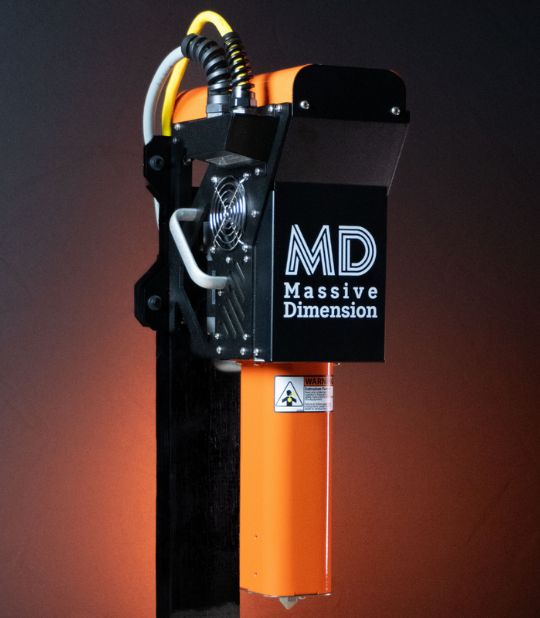
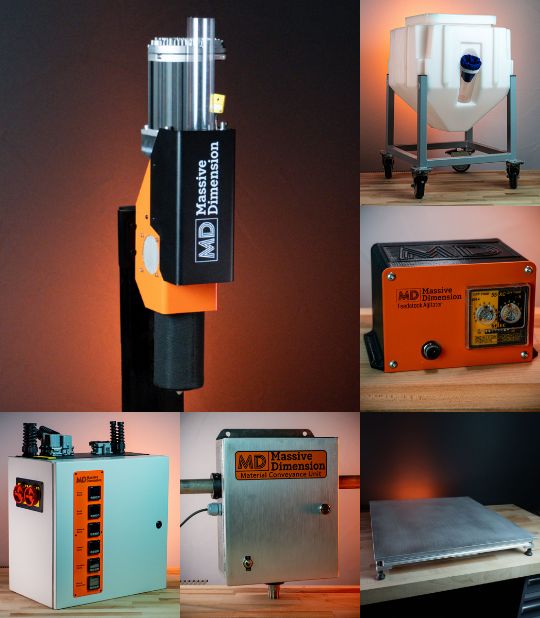
The Massive Dimension MDAC3 is a high-performance, large-format additive manufacturing (LFAM) system engineered for industrial thermoplastic 3D printing. Combining the ABB PoWa 16 kg robotic platform with the Massive Dimension MDX10 pellet extrusion system, the MDAC3 delivers high material throughput, robotic flexibility, and industrial-scale manufacturing capabilities in a compact, accessible platform.
With a 1,500 × 1,000 × 1,000 mm build volume, the MDAC3 is designed to manufacture large functional components, tooling, fixtures, prototypes, and low-volume production parts.
The MDX10 pellet printhead supports interchangeable nozzles ranging from 1 mm to 4 mm, providing flexibility to optimize print resolution, extrusion width, and material deposition rates.
By processing thermoplastic pellets directly, the MDAC3 offers significant opportunities for material cost reduction compared with filament-based systems, while expanding access to industrial polymer feedstocks.
Designed for flexible installation, the MDAC3 operates on 208–240 VAC single-phase electrical power, reducing infrastructure requirements compared with traditional three-phase industrial manufacturing equipment.
High-Output Pellet Extrusion
The integrated MDX10 extrusion platform delivers material deposition rates up to 4 kg/hr, supporting efficient production of large-format thermoplastic components.
ABB Robotic Automation
The ABB PoWa robotic arm provides a 16 kg payload capacity, enabling flexible robotic toolpath execution for large-format additive manufacturing.
Large-Format Build Capacity
A 1,500 × 1,000 mm build platform and 1,000 mm vertical printing envelope accommodate large industrial parts and complex geometries.
Heated Build Platform
An integrated heated build surface is designed to support thermoplastic printing by promoting first-layer adhesion and thermal management throughout the manufacturing process.
Flexible Nozzle Configuration
Interchangeable nozzle sizes from 1 mm to 4 mm allow users to select the appropriate balance between detail, bead width, and productivity.
Direct Pellet Processing
Direct extrusion of thermoplastic pellets reduces dependence on filament feedstock and enables greater flexibility in material sourcing and manufacturing economics.
Single-Phase Electrical Operation
The MDAC3 is designed for 208–240 VAC single-phase electrical service, simplifying installation in research, development, and industrial manufacturing facilities.
| Specification | MDAC3 |
|---|---|
| Printing Technology | Robotic Large-Format Additive Manufacturing (LFAM) |
| Robotic Platform | ABB PoWa |
| Robot Payload Capacity | 16 kg |
| Extrusion Platform | Massive Dimension MDX10 |
| Feedstock | Thermoplastic pellets |
| Build Volume (X × Y × Z) | 1,500 × 1,000 × 1,000 mm |
| Maximum Deposition Rate | Up to 4 kg/hr |
| Nozzle Diameter | 1–4 mm |
| Build Platform | Heated build surface |
| Build Platform Temperature | 80°C design target, pending validation |
| Electrical Input | 208–240 VAC, single-phase |
| Overall Cell Dimensions | To be finalized |
| Supported Materials | Subject to material qualification |
| Software Compatibility | To be finalized |
Manufacturing Tooling: Custom fixtures, molds, patterns, and production aids.
Functional Prototyping: Full-scale engineering prototypes and design validation components.
Low-Volume Production: Production of specialized components without conventional tooling.
Research & Development: Thermoplastic material evaluation, process development, and additive manufacturing research.
Industrial Components: Custom replacement parts, enclosures, and large structural components.
The Massive Dimension MDAC3 combines ABB robotic automation, high-output pellet extrusion, and large-format build capacity into a versatile additive manufacturing platform. Designed to make industrial-scale thermoplastic printing more accessible, the MDAC3 provides manufacturers, researchers, and product developers with a flexible solution for producing large, functional components directly from pellet feedstock.