

From Digital Design to Architectural Scale

Architecture schools are increasingly moving beyond digital design alone. Today, students and faculty need ways to fabricate, test, and refine physical structures at meaningful scale.
That is where large-format robotic 3D printing becomes extra powerful.
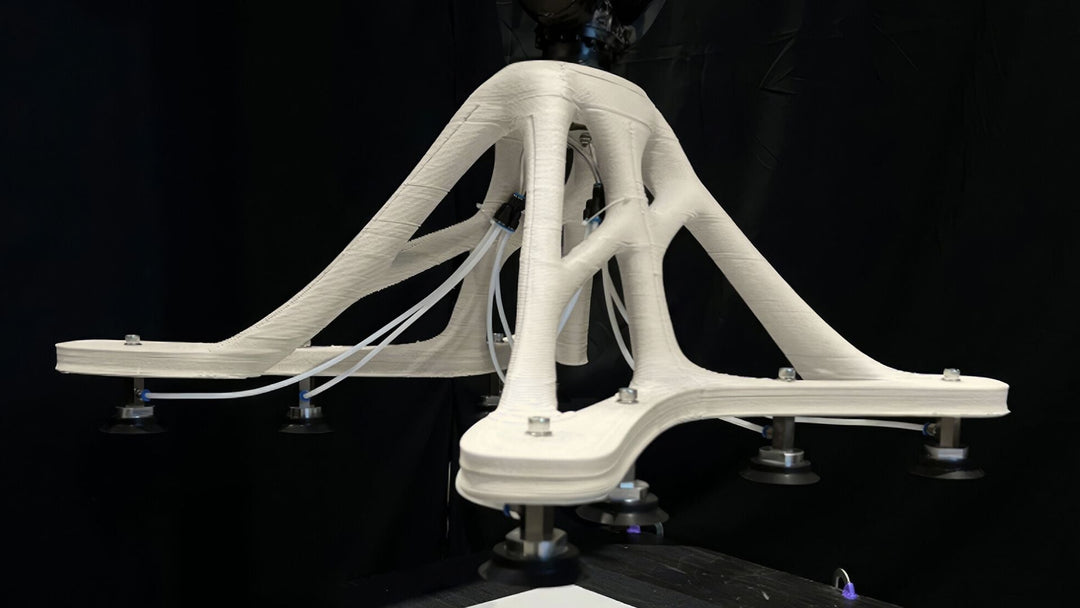
Massive Dimension recently completed an installation at the Spitzer School of Architecture at the City College of New York, expanding the school’s Robotics Lab with large-format pellet extrusion capability for architectural research, teaching, and fabrication.
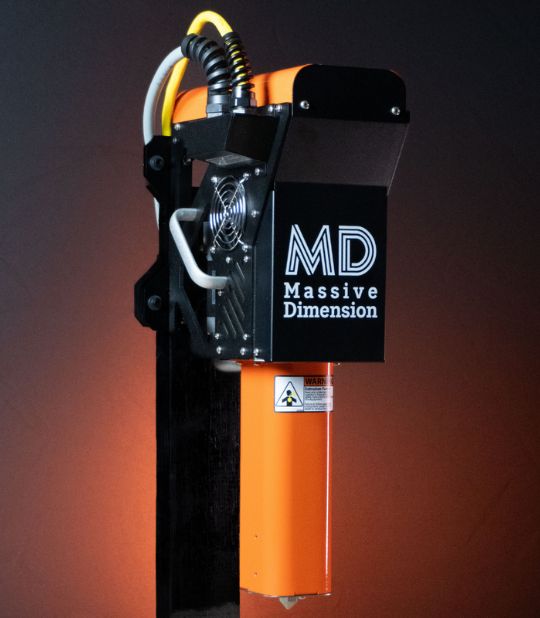
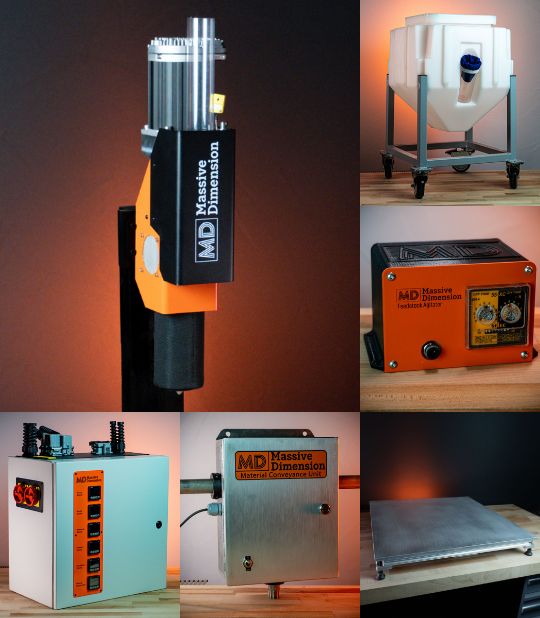
Spitzer’s Robotics Lab already includes a strong ABB robotics foundation, ranging from GoFa cobots to larger industrial robotic systems with positioning and track capabilities. By integrating Massive Dimension’s MDPE10 pellet extruder onto the lab’s ABB IRB 5720, Spitzer now has a flexible platform for large-format additive manufacturing.

For students and faculty, this opens the door to a different kind of architectural exploration. Instead of stopping at digital models or small-scale prototypes, they can begin testing physical forms, material behavior, robotic toolpaths, and fabrication strategies at a much larger scale.
Pellet extrusion is especially valuable in this environment. It enables faster deposition, larger printed structures, and broader material experimentation than traditional filament-based 3D printing workflows. For an architecture lab, that means students can explore new geometries, recycled or experimental polymers, filled materials, and fabrication methods that are closer to real-world construction and industrial workflows.

The system also includes a Schunk manual toolchanger, allowing the lab to switch between the MDPE10 pellet extruder and a milling spindle. That hybrid capability is important. It gives students the ability to move beyond printing alone and explore workflows that combine additive manufacturing, subtractive finishing, custom toolpaths, and post-processing in one robotic cell.
This is how advanced fabrication often works in practice: print, trim, finish, refine, and iterate.
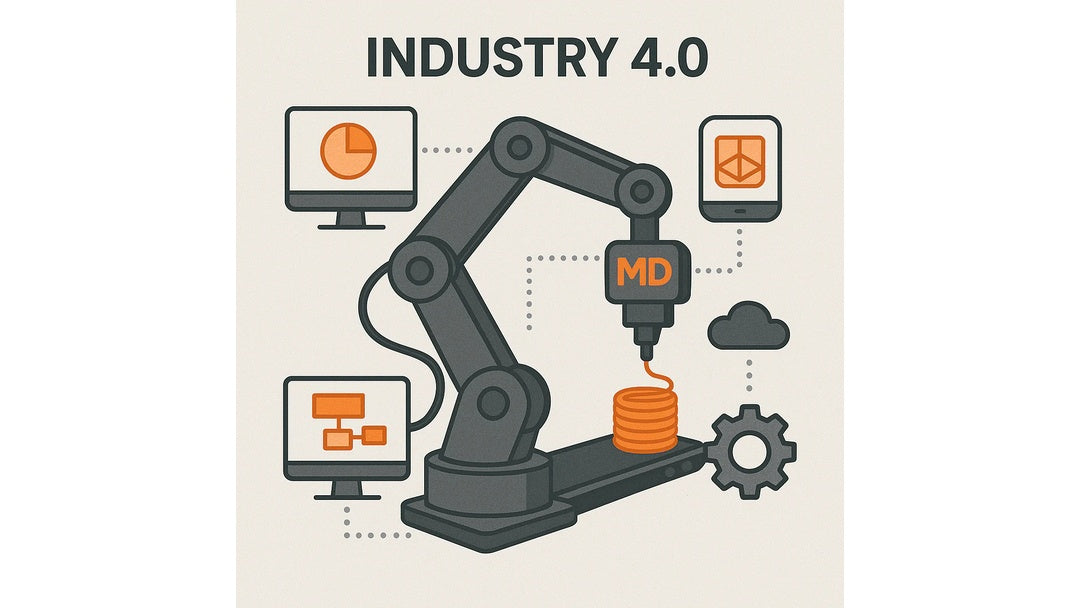
Students at Spitzer will generate toolpaths using a custom Grasshopper script developed in-house within Rhino. From there, the workflow produces G-code, which is processed through ABB’s RobotStudio 3D Printing PowerPac to generate RAPID code for the robot controller.
That open workflow gives students and faculty room to experiment. Rather than being limited to a closed, predefined process, the system becomes a platform for research, iteration, and invention.

Speaking with Gordon Gebert, who teaches architectural design at Spitzer and has helped bring the Robotics Lab to life, it was clear that this flexibility was central to the vision for the lab.
Robotic 3D printing is not just a way to make parts. It is a way to understand the relationship between design intent, material behavior, machine motion, and physical outcome.
That is exactly where Massive Dimension’s technology delivers value.
For universities, research labs, and innovation centers, large-format robotic additive manufacturing creates a practical bridge between digital design and physical fabrication.
It gives students hands-on access to industrial robotics, real materials, large-scale printing, and hybrid manufacturing workflows.
Massive Dimension is proud to support Spitzer’s Robotics Lab as it builds the next generation of architectural fabrication capability. We look forward to seeing how students and faculty use this platform to test new ideas, challenge traditional workflows, and bring ambitious digital designs into the physical world.
For more information on the Massive Dimension Industrial Large Format Additive Manufacturing, see our product pages: https://massivedimension.com/pages/mdac-industrial-series